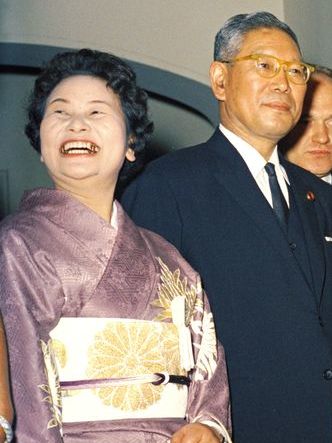
This week, we’re kicking off a short series on the transformations of 1960s Japan with a look at the unassuming politician who helped shape Japan’s postwar structure: Ikeda Hayato. Who was Ikeda, and how did he get into politics? And how did a man who was once accused of being a callous monster become a beloved everyman of the people?
Sources
Kapur, Nick. Japan at the Crossroads: Conflict and Compromise After Anpo
Green, Michael J. Line of Advantage: Japan’s Grand Strategy in the Era of Abe Shinzo.
Watanabe, Hiroaki Richard. The Japanese Economy.
The New York Times obituary of Ikeda after his death in August, 1965.
Images
It’s definitely nice to see Ikeda getting his long needed due. The Japan that became an economic juggernaut and sparked the belief by the ’80s that the future of the world would be a Japanese one was really birthed from his ideas, policies and leadership. As you show in the episode, Ikeda managed to pretty skillfully and shrewdly bring about a sense of unity both within the LDP and among the population through the time tested and often times forgotten–especially among conservative politicians–political trick of giving a little to gain a lot.
I believe you’ve said a few times that you consider Yoshida to be Japan’s best and/or most important Prime Minister but for me, it’s always been Ikeda and I’d argue that going back to his economic work prior to becoming PM, he’s arguably Japan’s most important post-war politician period. I suppose, though, that it’s basically a case of 1a vs. 1b when it comes to arguing Yoshida vs. Ikeda.
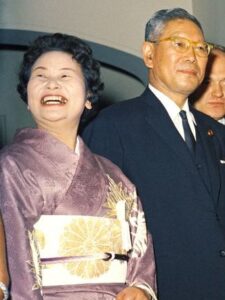
His wife is a bit… unsightly. I can see why he threw all those geisha parties.
Man, the Japanese press is brutal.